


Industrial 3D Printing: Production Solutions for Prototypes and Technical Components
What is industrial 3D printing
Industrial 3D printing refers to the use of additive manufacturing in technical and production environments. Unlike hobby or purely demonstrative applications, components must meet stricter performance and quality requirements.
This means the process is managed by considering several key factors:
dimensional accuracy
mechanical strength
operating conditions
integration with other components
long-term durability
A 3D printed component intended for industrial use must be capable of performing a real function within a mechanical or production system.
For this reason, industrial 3D printing requires a more structured approach compared to simple model production.
Why more and more companies are adopting 3D printing
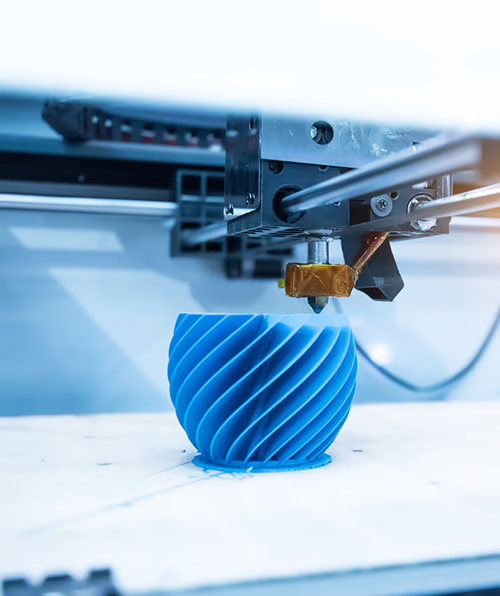
One of the main reasons behind the widespread adoption of industrial 3D printing is its ability to significantly reduce product development time.
In traditional manufacturing processes, producing molds or tooling can take weeks or even months. With 3D printing, a first functional component can be obtained in a much shorter time.
This allows companies to:
rapidly test new design solutions
verify dimensions and fitment
implement design changes quickly
reduce development-related costs
In this way, additive manufacturing becomes a valuable tool not only for producing parts, but also for improving the overall design process.
Applications of 3D Printing in the Industrial Sector
In industrial environments, 3D printing can be applied across a wide range of use cases. Some of the most common applications include:
Functional prototyping
Before moving to full-scale production, prototypes can be produced to verify dimensions, assemblies, and component performance.
Production tooling
Many companies use 3D printing to create tools for production lines, such as jigs, fixtures, supports, guides, and mounting systems.
Technical spare parts
In some cases, 3D printing enables the reproduction of components that are no longer available on the market or are difficult to source.
Custom Components
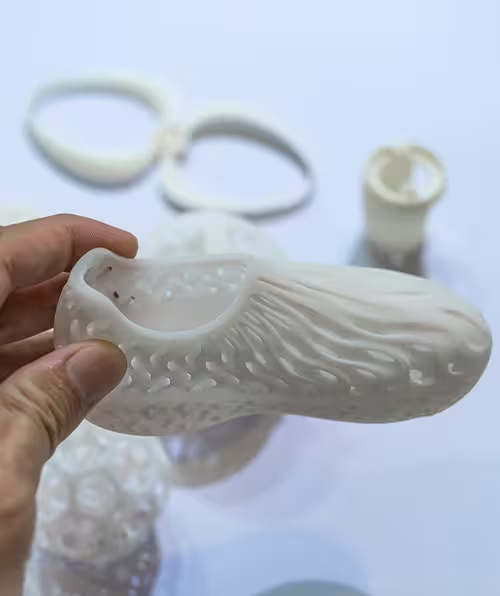
When an application requires specific parts, additive manufacturing makes it possible to produce custom components without the need for expensive industrial tooling.
Materials Used in Industrial 3D Printing
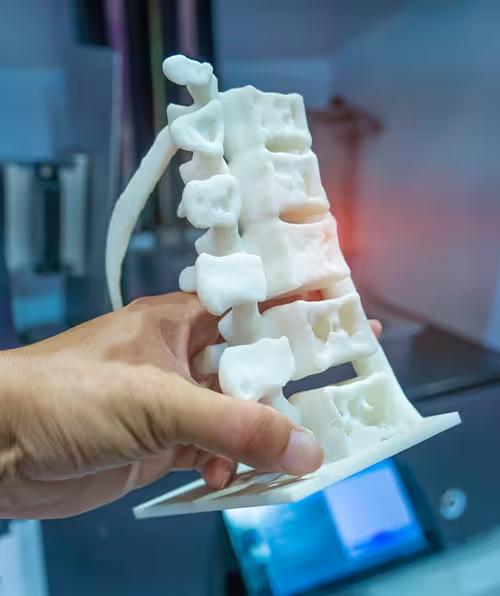
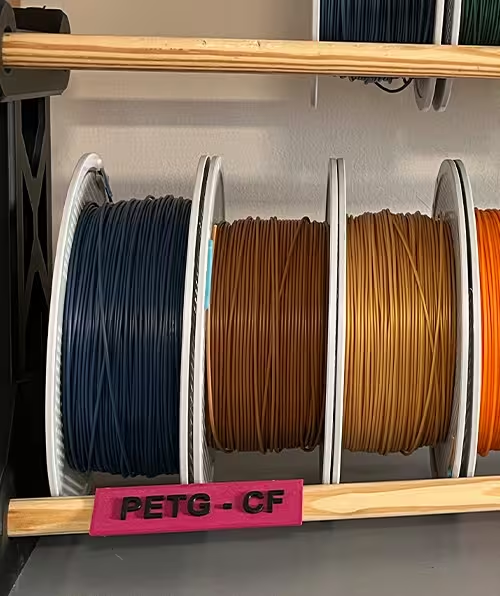
Material selection is one of the most critical aspects of industrial 3D printing. Depending on the final application, different polymers can be used to meet specific performance requirements.
Some materials offer:
Higher mechanical strength
good dimensional stability
high temperature resistance
chemical resistance
Choosing the right material always depends on the operating conditions in which the part will be used.
For this reason, before production, it is essential to carefully evaluate the application of the component.
Advantages of Industrial 3D Printing
Additive manufacturing offers several advantages compared to traditional production methods, especially when dealing with low volumes or complex components. Key advantages include: Reduced development time Prototypes and test components can be produced quickly. Greater design flexibility Modifying a design does not require the creation of new molds. Production of complex geometries Shapes that are difficult or impossible to achieve with traditional manufacturing methods can be easily produced. Component Customization Each part can be tailored to the specific requirements of its application.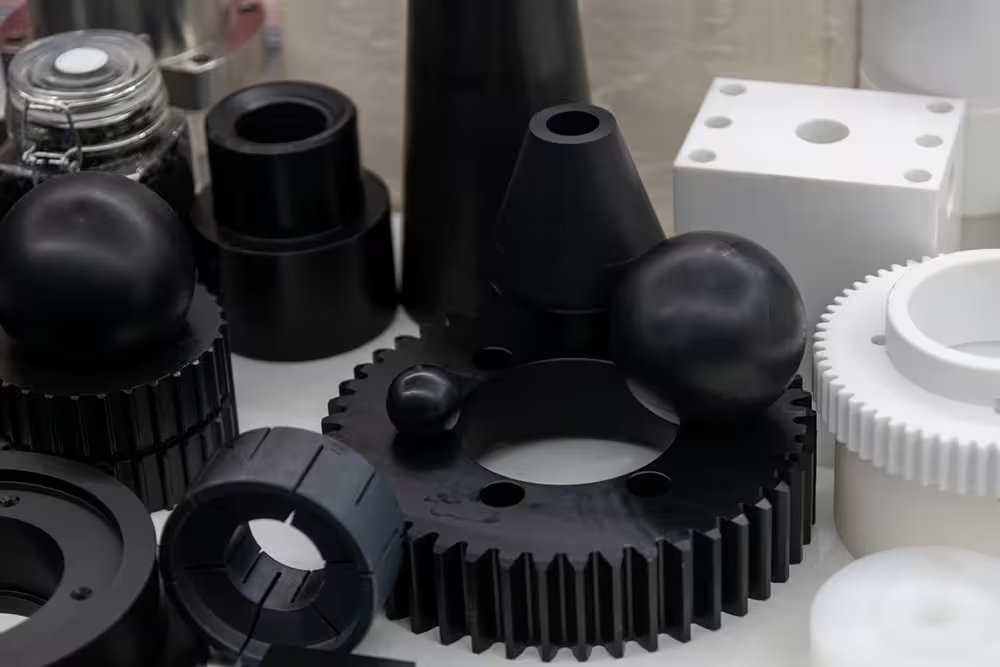
When is industrial 3D printing the best choice?
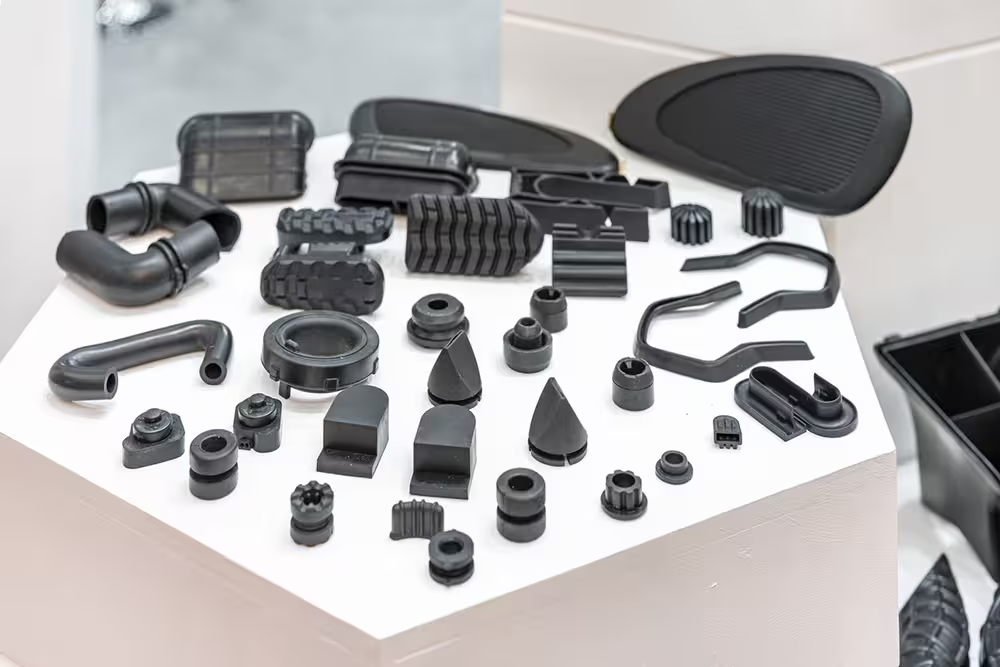
Industrial 3D printing is particularly suitable in specific scenarios such as:
new product development
small batch production
manufacturing of technical tooling
replacement of discontinued components
In these cases, additive manufacturing makes it possible to produce functional components without the costs and lead times associated with traditional industrial production.