


Professional 3D Printing: When Precision Is Not Optional
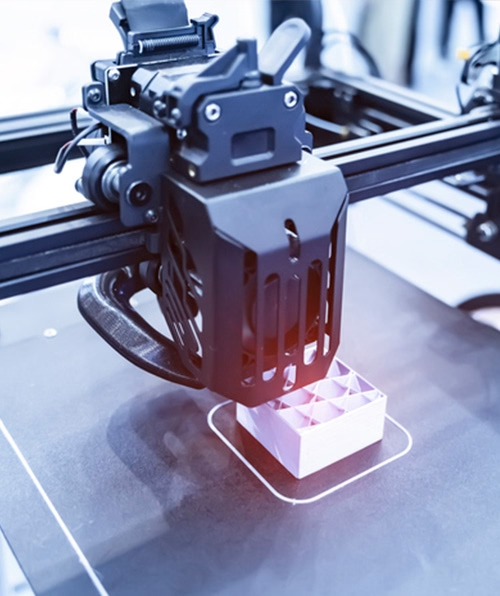
Professional 3D printing is not just about starting a machine and waiting for a result. When a component needs to perform—fit with other parts, withstand loads, or maintain tight tolerances—multiple technical factors come into play, including print orientation, material behavior, production parameters, and final quality control.
For this reason, a professional service goes beyond production: it starts with project analysis and a clear understanding of the component’s final application.
What Professional 3D Printing Really Means
In common language, 3D printing is often treated as a single, uniform technology. In reality, there is a significant difference between parts created for demonstration purposes and those engineered for real-world use.
Professional 3D printing is defined by several key factors:
technical file analysis before production
evaluation of dimensional tolerances
material selection based on the final application
optimization of part orientation
post-print quality control
This approach allows us to produce components that are not just aesthetic models, but truly functional parts.
Why File Preparation Is Critical
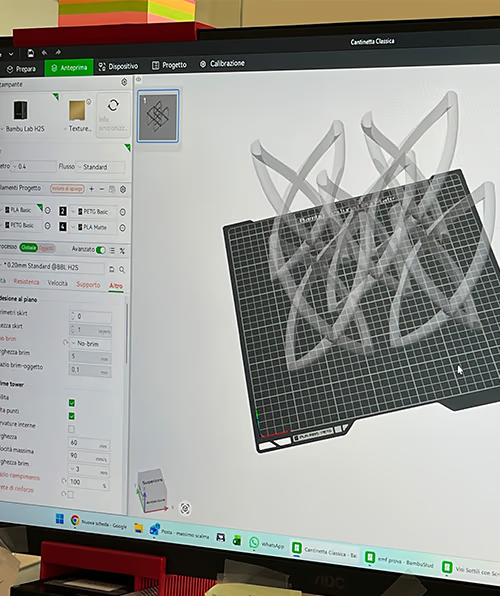
One of the most underestimated aspects of 3D printing is digital model preparation. A file may look perfect on screen but still present issues once turned into a physical object.
Walls that are too thin, non-manifold geometries, or assemblies designed without proper tolerances can lead to defects that are difficult to correct after production.
For this reason, before starting the printing process, a technical review of the model is always recommended. In many cases, small adjustments are enough to significantly improve strength, accuracy, and overall part quality.
Precision and Tolerances in 3D Printing
- When a component needs to be assembled with other parts, dimensional accuracy becomes a critical factor. Unlike some traditional manufacturing processes, 3D printing introduces variables related to material behavior during cooling.
Each polymer behaves differently: some tend to shrink, while others offer greater dimensional stability. For this reason, proper tolerances must be considered already during the design phase.
A professional 3D printing service takes these factors into account and adjusts production parameters to achieve the best balance between accuracy and mechanical performance.
Material Selection Is Never Random
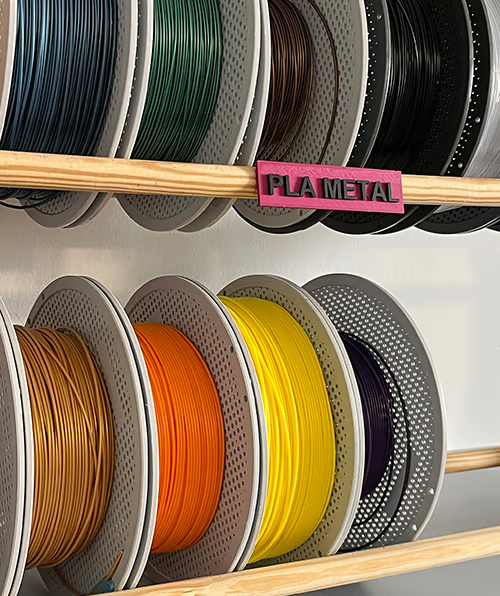
One of the most common mistakes is choosing a material based only on availability or cost. In reality, material selection should always be driven by the final application of the component. An aesthetic prototype can be produced using standard materials, while a component intended for real operating conditions requires more resistant or application-specific materials. Operating temperature, mechanical stress, exposure to humidity, and contact with chemicals are all factors that influence the choice of the most suitable material.Prototyping and Product Development
One of the main advantages of professional 3D printing is the ability to quickly test new design solutions. Before investing in molds or industrial production, it is possible to create functional prototypes to verify dimensions, fit, and part performance.
This process makes it possible to identify potential issues early and implement design changes much faster than with traditional manufacturing methods.
For many companies, 3D printing has therefore become an extremely effective tool for product development and testing.
Low-Volume Production
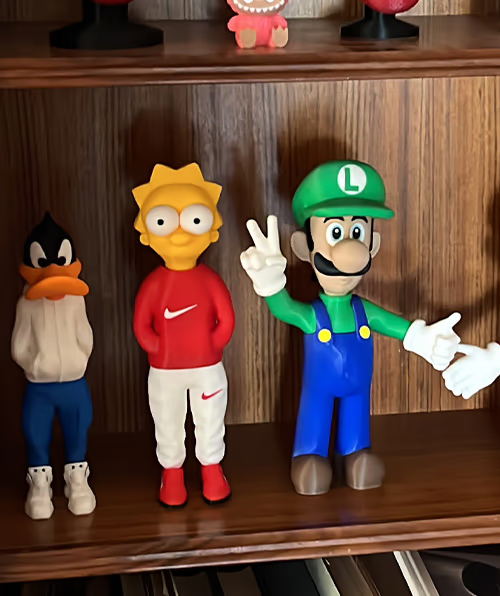
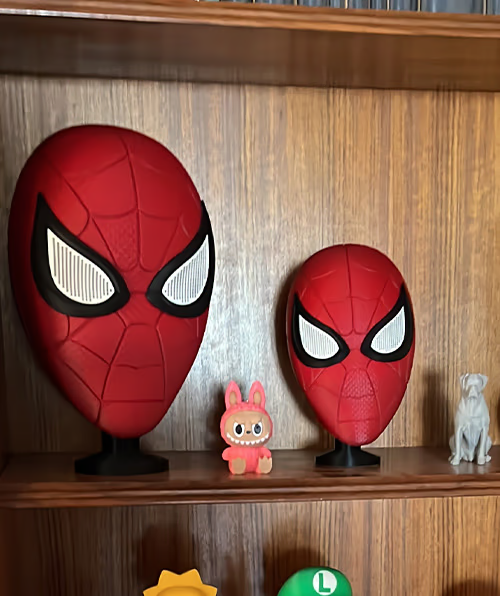
In addition to prototyping, professional 3D printing is increasingly used for the production of small batches of components.
When production volumes do not justify the creation of industrial molds, additive manufacturing allows for the production of custom parts with relatively fast lead times and lower costs.
This approach is particularly useful for specialized components, technical spare parts, or fully customized products.
When to Choose Professional 3D Printing
Professional 3D printing is particularly suitable when:
you need to develop or test a new product
you require custom technical components
you need to produce small quantities without molds
you require technical support during the design phase
In these scenarios, 3D printing becomes an extremely versatile solution, capable of reducing both development time and production costs.
A Technical Approach Before Printing
A professional 3D printing project always starts with a technical evaluation phase. Analyzing the file, understanding the intended use of the part, and selecting the most suitable technology helps prevent errors and ensures more reliable results.
This approach reduces the risk of failed prints and guarantees a result aligned with the project requirements.