



3D Printing Technologies: Overview of the Main Methods and Why We Use FDM Technology
When discussing 3D printing technologies, it is important to understand that there is no one-size-fits-all solution. Each method has its own characteristics, advantages, and limitations, making it more suitable for specific applications.
In our lab, we have decided to focus exclusively on FDM filament-based 3D printing—a dependable technology particularly suited for producing technical parts, functional prototypes, and custom-designed objects.
Main 3D Printing Technologies
In the additive manufacturing industry, several technologies are used. The most common include:
FDM 3D Printing (Fused Deposition Modeling)
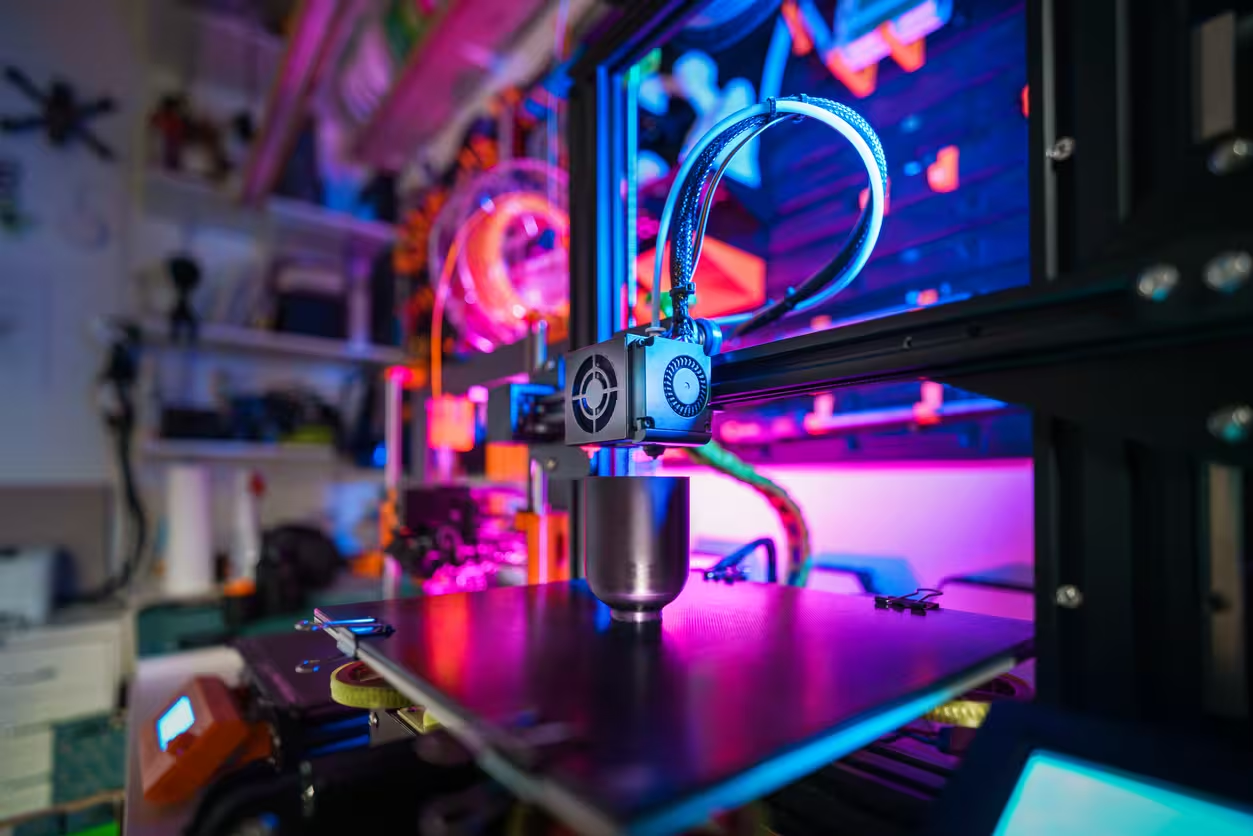
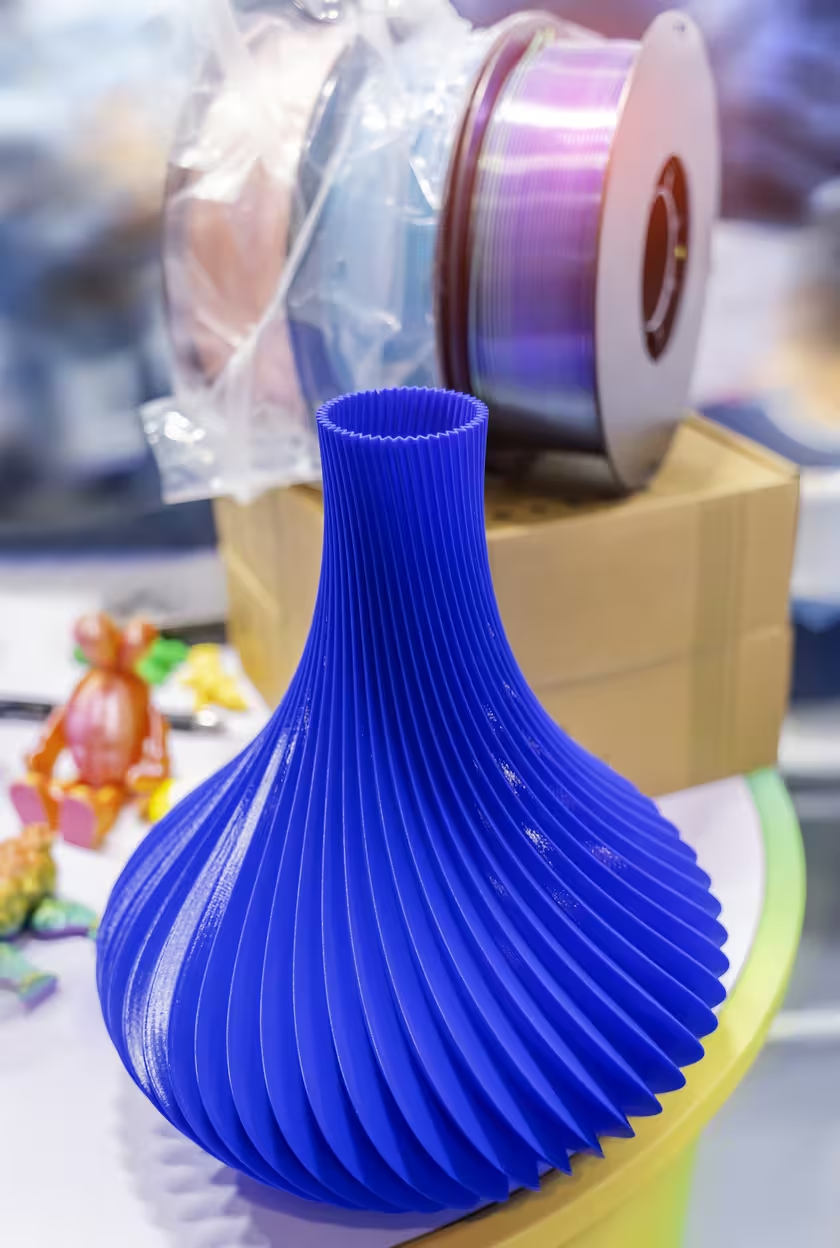
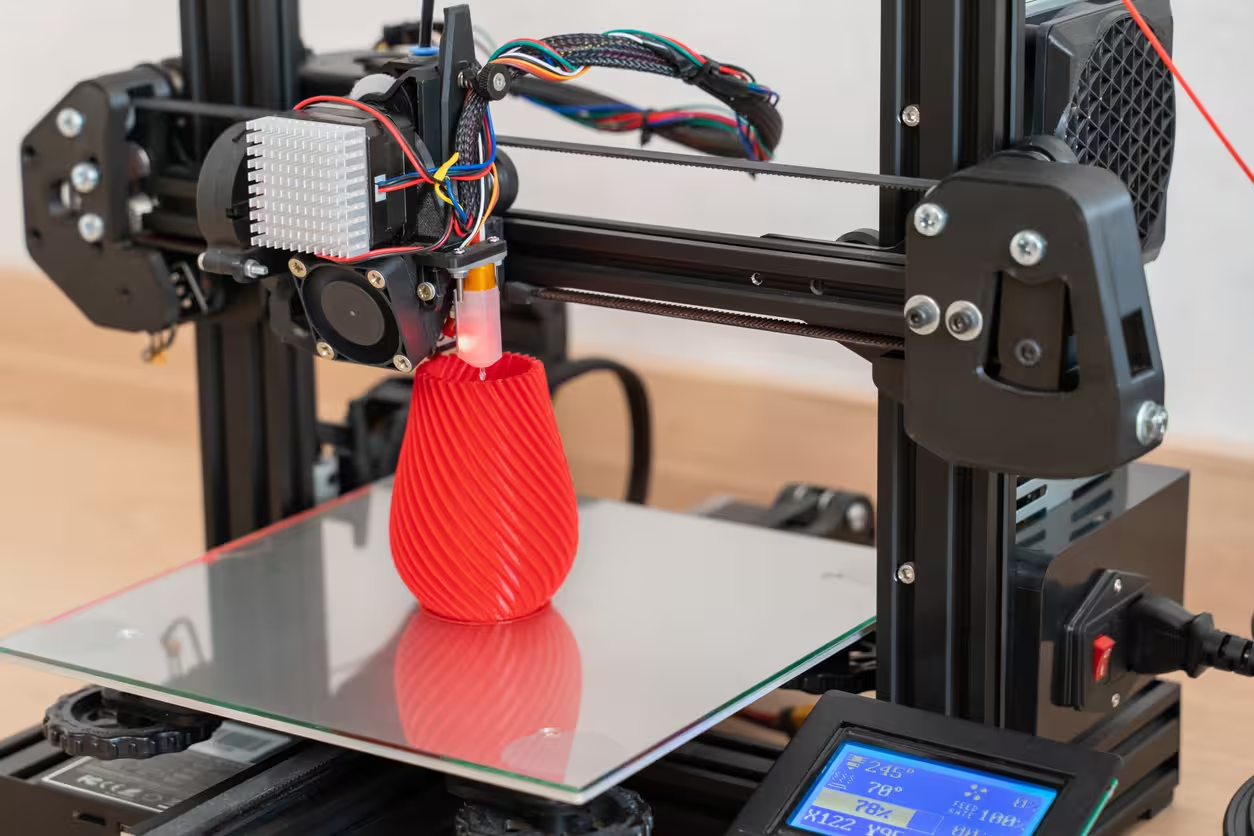
FDM technology uses thermoplastic filaments that are heated and extruded layer by layer to build the final object.
It is one of the most widely used 3D printing technologies worldwide for producing functional prototypes and technical components.
Key advantages include:
- Good mechanical strength
- Wide range of available materials
- Ability to produce medium-to-large sized parts
- lower production costs compared to other technologies
For these reasons, it is a widely adopted solution in both professional and industrial sectors.
Among the most commonly used materials in FDM 3D printing are also technical solutions such as:
- PETG, apprezzato per la sua resistenza e stabilità
- TPU, a flexible material ideal for elastic or shock-absorbing components
- Carbon fiber-reinforced PETG (PETG-CF), used when higher rigidity and structural strength are required
Material selection always depends on the final application of the component.
Resin 3D Printing (SLA / DLP)
Resin 3D printing uses liquid photopolymer materials that are cured using UV light.
This technology is particularly valued for its ability to produce highly detailed parts with smooth surface finishes.
It is commonly used for:
- Model making
- Jewelry
- Miniatures
- Aesthetic prototypes
However, compared to FDM technology, the materials used are generally more brittle and less suitable for mechanical applications.
SLS 3D Printing (Polymer Powder)
SLS technology uses plastic powders that are sintered using a laser.
It is widely used in industrial environments for producing complex components and small production runs.
This technology offers good mechanical strength but requires expensive industrial equipment and more complex production processes.
Why We Specialize in FDM 3D Printing
Every 3D printing technology has its strengths. In our lab, we have chosen to focus on FDM 3D printing because it offers an extremely versatile solution suitable for a wide range of real-world applications.
Filament-based technology allows the production of durable components, functional prototypes, and custom parts with fast turnaround times.
Another key advantage is the ability to use a wide range of technical materials, each with specific properties in terms of strength, flexibility, and dimensional stability.
Specializing in a single technology allows us to deeply understand the production process and consistently deliver more reliable results.
When FDM 3D Printing Is the Right Choice
FDM technology is particularly suitable when you need to:
- produce functional prototypes
- manufacture custom technical components
- develop new products
- produce small batches of parts
- create custom jigs and technical tooling
Thanks to its versatility, this technology is widely used in both professional and industrial environments.
A Specialized Approach
In the 3D printing industry, many service providers offer multiple technologies at the same time. We have chosen a different approach: to specialize in FDM technology.
This choice allows us to focus on a precise production process and continuously optimize it, ensuring more reliable and repeatable results.
When working with technical components or functional prototypes, having in-depth knowledge of the technology used makes a significant difference in the final result.